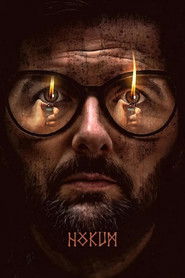
Cast: Adam Scott, Peter Coonan, David Wilmot, Florence Ordesh, Will O'Connell, Michael Patric, Siox C, Brendan Conroy, Austin Amelio, Ezra Carlisle, Mallory Adams
Release: 2026-05-01
Plot: A horror novelist visits a remote Irish inn to spread his parents’ ashes, unaware the place is rumoured to be haunted by a witch.
Damian McCarthy is auto-watch at this point. It will be interesting to see what imagery carries over into this. So far the bell from Oddity and the bunny theme from Caveat that had already carried over into Oddity
Damian McCarthy is auto-watch at this point. It will be interesting to see what imagery carries over into this. So far the bell from Oddity and the bunny theme from Caveat that had already carried over into Oddity
Looks like Hokum showing at AMC tonight, starting now on the east coast. Might be one of the two Regal double feature horror unseen movies being shown tonight
Not a bad movie but not scary at all, I guess I consider it suspense/thriller. Very little supernatural stuff, I would put it up with movies like Mothman prophecy or something like that?
Jumpscare driven, lots of dead space and a few bits in the 2nd act were really jarring/annoying.
The television zombie shit just didn't fit the overall theme of the movie. It seemed confused as to what it wanted to be as a genre and then explained it away cheaply at the end of the movie by saying "welp he was on a ton of mushrooms". Cheap plot device.
Up there with "it was all a dream" bullshit. I liked Act 1, but knew it was going to just go off the rails and throw the kitchen sink.
Definitely would feel annoyed if I paid money to see this in theaters. It's an at-home direct to VOD movie for sure.
Well shot, looks good, fine acting, conventional story with a couple frustrating bits and a couple really generic ones. It reminded me of The Ritual. Our main character goes out on vacation to honor the memory of a dead loved one and supernatural stuff occurs. We get the visual representation of his guilt or sin throughout the film woven through the larger story being told.
I see why Obsession and Backrooms made all the money and this did not. It's going to come off as hokey or anachronistic to younger audiences and people like me have seen every single thing it's doing a hundred times over.
By far the the worst stuff is
Adam Scott being unable to...break a window? Everything about him problem solving his entrapment is ass. Ringing the bell to have the line snap to fish the broken end out of the wall to have Forest Guy still not hear to then hear again I'm sure looked like incredible building tension on the page but in practice the audience is five steps ahead and already bored.
If this whole thing was like 15 or 20 minutes shorter it would have been so much better
Scope and freedom seem to be the biggest issues with many good directors/writers.
I didn't dislike this but it is my least favorite of his films. When you break it down, there's a Caveat-scoped film in here that is set into a larger box that has an extra layer of emotional character development and characters that seem to conflate rather than assist.
It has the most extraneous characters of any of his films, and that doesn't help it feel more intentional and concise. The bellboy is there for arc and the elevator, the old man is there to exposit folklore, and so we know "that's the guy with the key", the handyman guy is there to be the vehicle for Chekov's gun when in his other two movies we'd have assumed or combined those roles as minor attributes of major characters. Main character, woman in danger, kind person who betrays, wise vagrant all seem to fit into his proven, workable types, and this has a whole B cast that further clutters things up.
The character arc works but it changes what this is too much for me to call it a success and it's hand held a bit too much as opposed to his other films, where he has a lot of faith in the audience to draw connections before he confirms them. The core horror still follows that path, but the emotional wrapper is really overt and telegraphed explicitly in the dialogue.
"Why would you write that? That's horrible" -> because I'm a terrible person -> I've forgiven myself and I know that I'm not terrible -> I don't write that anymore.
The forest, the hotel, the room, the dumbwaiter, and the basement are good enough to hang this plot on, and I think that it would have been stronger if it relied on that simplicity rather than the extra parts tacked on.
Well shot, looks good, fine acting, conventional story with a couple frustrating bits and a couple really generic ones. It reminded me of The Ritual. Our main character goes out on vacation to honor the memory of a dead loved one and supernatural stuff occurs. We get the visual representation of his guilt or sin throughout the film woven through the larger story being told.
I see why Obsession and Backrooms made all the money and this did not. It's going to come off as hokey or anachronistic to younger audiences and people like me have seen every single thing it's doing a hundred times over.
By far the the worst stuff is
Adam Scott being unable to...break a window? Everything about him problem solving his entrapment is ass. Ringing the bell to have the line snap to fish the broken end out of the wall to have Forest Guy still not hear to then hear again I'm sure looked like incredible building tension on the page but in practice the audience is five steps ahead and already bored.
If this whole thing was like 15 or 20 minutes shorter it would have been so much better
Yeah, I have the same feelings. Having just watched Obsession and Backrooms back-to-back and then this last night, it did not leave a great impression. I guess it is fine but by the end I had already checked out and stopped caring, and then especially the very end with the bellboy again and the mushrooms. At first I thought it was going to lean way more into Shining influences with the hotel, bartender, troubled writer, alcohol, Room 237 vs. Honeymoon suite.. etc etc. It just kind of lost me at some point. There's a place for this film and type but this does nothing new and nothing great.
Well shot, looks good, fine acting, conventional story with a couple frustrating bits and a couple really generic ones. It reminded me of The Ritual. Our main character goes out on vacation to honor the memory of a dead loved one and supernatural stuff occurs. We get the visual representation of his guilt or sin throughout the film woven through the larger story being told.
I see why Obsession and Backrooms made all the money and this did not. It's going to come off as hokey or anachronistic to younger audiences and people like me have seen every single thing it's doing a hundred times over.
By far the the worst stuff is
Adam Scott being unable to...break a window? Everything about him problem solving his entrapment is ass. Ringing the bell to have the line snap to fish the broken end out of the wall to have Forest Guy still not hear to then hear again I'm sure looked like incredible building tension on the page but in practice the audience is five steps ahead and already bored.
If this whole thing was like 15 or 20 minutes shorter it would have been so much better
saw this last night. agree with most points made. as with many horror/suspense movies they start out solid but the ending just falls flat.
that whole scene with him locked in the room and the bell ringing and that guy jerry leaving and coming back like three times was just so badly written to introduce suspense, and so ridiculous how the bad guy Mal is scared of Jerry whos like half dead weakly carrying a hatchet. and yeah, ohm being caught a whole night in a hotel room without being able to bust open a door or a window or do anything? but he's suddenly able to smash up a wall to grab the bell string when the time comes. right.
I just got done watching it. I didn't think it was bad, and definitely had some creepy moments. Not smashing the window did annoy me, but I guess it's better than a lot of stuff that's out there.
Like some of you said though it could have been maybe 20-30 minutes shorter. I do think the director has talent though and I'll probably watch his next film.